
Bizzdesign Unify: An AI-native platform for faster, better transformation decisions.
Crédit Agricole Cards & Payments Defines a New Products and Services Offering Using a Process Repository
Crédit Agricole Cards & Payments Defines a New Products and Services Offering Using a Process Repository
Challenges
- Identify and better understand the business processes related to the new products and services offer
Results
- Optimized processes to create a more customer-centric environment
- A repository of business processes shared and used by stakeholders, especially in defining and upgrading the new offer
What challenges did you encounter that led to modeling CACP's processes?
Three factors acted as the catalyst for this. First, the compliance environment and new payment options considerably changed the circumstances of our core business. For example, creating the SEPA area (Single Euro Payments Area) aims to harmonize the means of payment in the Eurozone.

Customer
Crédit Agricole Payment Services
Headquarter
Guyancourt, France
Tajco: Improve Visibility To Boost Efficiency While Continuing To Meet Quality Standards
Tajco: Improve Visibility To Boost Efficiency While Continuing To Meet Quality Standards
Challenges
- Support the international growth strategy while standardizing processes across all countries.
- Understand how processes affect operations
- Comply with numerous quality standards, including ISO and IATF
Results
- Mapping all business processes and procedures into a single repository
- Better strategic alignment and performance measures
- Broken-down silos and enhanced operational efficiency
- Better process control with regular assessment
- Easier demonstration of compliance with transparent and readily available information
Improve visibility across the organization and its processes to boost efficiency.
TAJCO is a global supplier of exhaust trims for the automotive industry. As such, it must comply with numerous quality standards like those issued by ISO and IATF – while continuing to implement its international growth strategy.
To tackle these challenges, they wanted a repository-based tool that would enable them to:

Headquarter
Ningbo, Zhejiang
Naval Group Implements a High-Performance Quality Management System
Naval Group Implements a High-Performance Quality Management System
Challenges
- Simplify and standardize processes
- Facilitate access to process information
- Secure involvement of people concerned
- Reinforce efficiency of process management
Results
- Business processes simplification
- Enhanced operational efficiency
- Better process control and execution
Implement a high-performance quality management system
Naval Group is Europe's leading provider of naval defense systems and services. The company generated €3.6 billion in revenue in 2018 and had 14,860 employees at year-end.

Customer
Naval Group
Headquarter
Paris, France
Leading Asian Bank: Improve the Customer Experience
Leading Asian Bank: Improve the Customer Experience
Challenges
- Define and share a consistent way to document the process
- Implement process standardization
- Improve process and customer experience
Results
- Customer-centric model
- Process maturity assessment
- Information sharing tool
As one of the leading banks in Thailand, managing hundreds of products and services, customer experience, and process standardization are central pillars of the bank's strategy.
Before using Bizzdesign Hopex, this bank documented processes and workflows in various tools, including PowerPoint, Visio, Excel, and Word, and process data was kept in employee storage.
To improve processes and customer experience, they needed to establish the following:

Edison Energia - Increase Visibility and Collaboration Through an Efficient Process Mapping Program
Edison Energia - Increase Visibility and Collaboration Through an Efficient Process Mapping Program
Challenges
- Management of organizational changes
- Process mapping
- Create a process-oriented culture
- Design of an efficient, end-to-end customer experience
Results
- Set up a shared information repository with internal stakeholders
- Ability to incorporate organizational changes quickly
- Support the business for the development of new projects
An interview with Cristina Macchi, Quality, Compliance & Processes Manager at EDISON ENERGIA
The Quality, Compliance & Processes function of the Gas&Power Market Division of Edison supports the business in defining, updating, and formalizing processes. Looking back over our long experience in process mapping, the three key pillars have been business needs and development, instruments, and people.

Customer
Edison Energia
Headquarter
Italy
Risk and Business Process Management for Neobanks
Risk and Business Process Management for Neobanks
Challenges
- Ensure compliance requirements
- Restore reputation
- Retrieve accessibility rights to certain markets
Results
- Centralized shared repository of business processes
- Efficient risks and compliance management
- Improved digital resilience
From regulatory halt to business continuity: How a Neobank managed to overcome a regulatory setback
A major player in the fintech industry recently made the headlines by being urged by a local regulator to address its significant compliance and security flaws that led to severe breaches of anti-money laundering (AML) and terrorism financing laws.

Bizzdesign Announces New Leadership Team Following Merger With MEGA and Alfabet
Bizzdesign Announces New Leadership Team Following Merger With MEGA and Alfabet
May 27, 2025
Utrecht, Netherlands, May 27, 2025
Bizzdesign, a leading enterprise transformation SaaS company, today announces its new Leadership Team for the combined organization following its merger with MEGA International and Alfabet. Operating under the unified name Bizzdesign, the company solidifies its position as a global leader in enterprise transformation.
About Bizzdesign
Bizzdesign is a global enterprise transformation SaaS company, offering an end-to-end suite spanning Enterprise Architecture, Strategic Portfolio Management, Governance, Risk & Compliance, and Transformation Collaboration. Through a data-driven and AI-powered approach, Bizzdesign accelerates transformation from vision to value by enabling teams to plan, design and govern change collaboratively.
Business Process Management
Business Process Management
Achieve Operational Excellence
With Business Process Management









Boost Operational Efficiency and Resilience
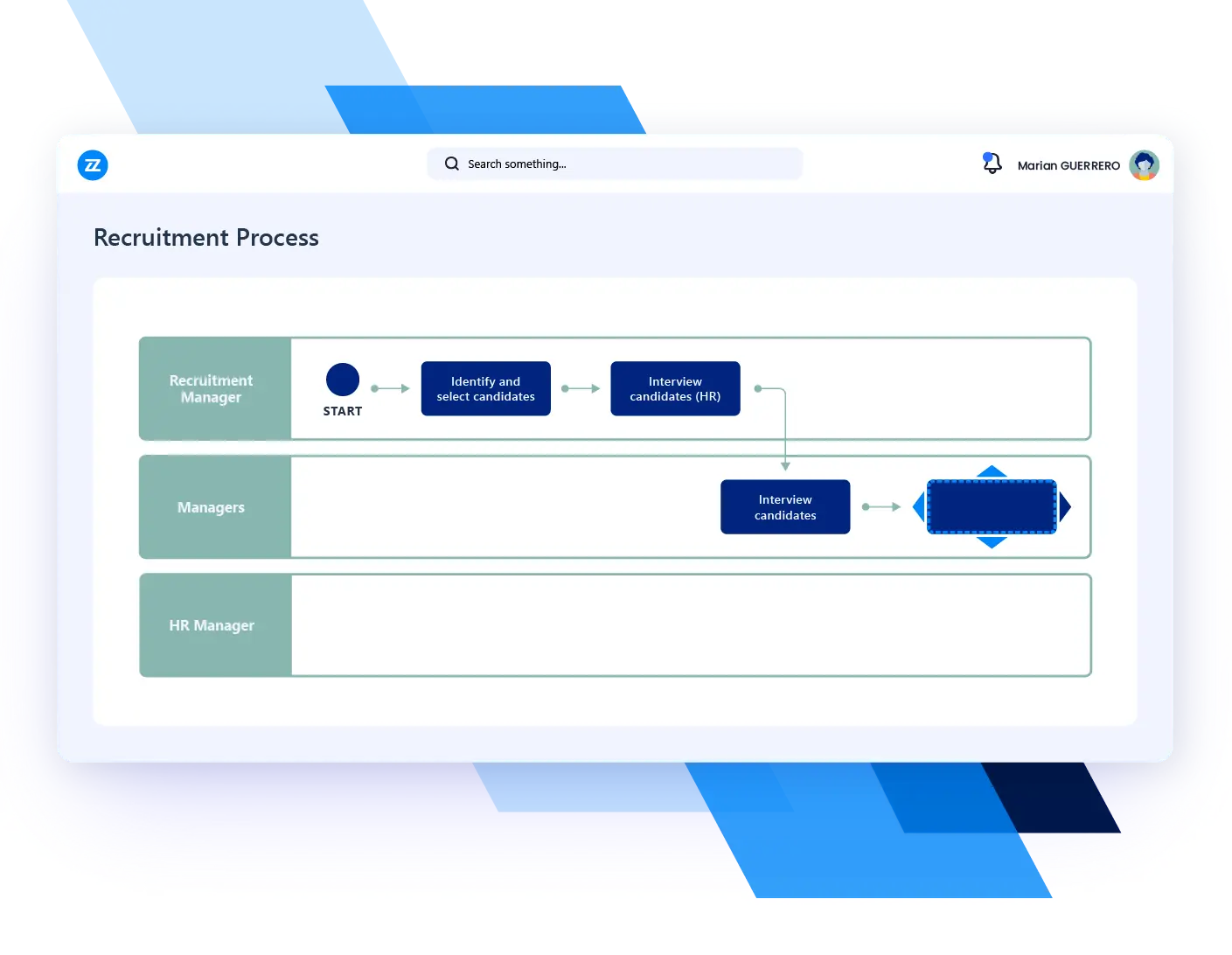
Without full visibility into bottlenecks and redundant steps, value creation and customer satisfaction suffer. Business Process Management helps you model, analyze, and optimize how value flows through your organization, creating the foundation for a dynamic Digital Twin of your Organization (DTO). By connecting process models with operational data and KPIs, you gain deeper visibility, eliminate waste, accelerate execution, and ensuring stronger, data-driven compliance.
Make Operations Flow. Boost Performance.
- Increase visibility into core business processes and dependencies, and the operational context around them.
- Eliminate bottlenecks to accelerate execution and reduce costs.
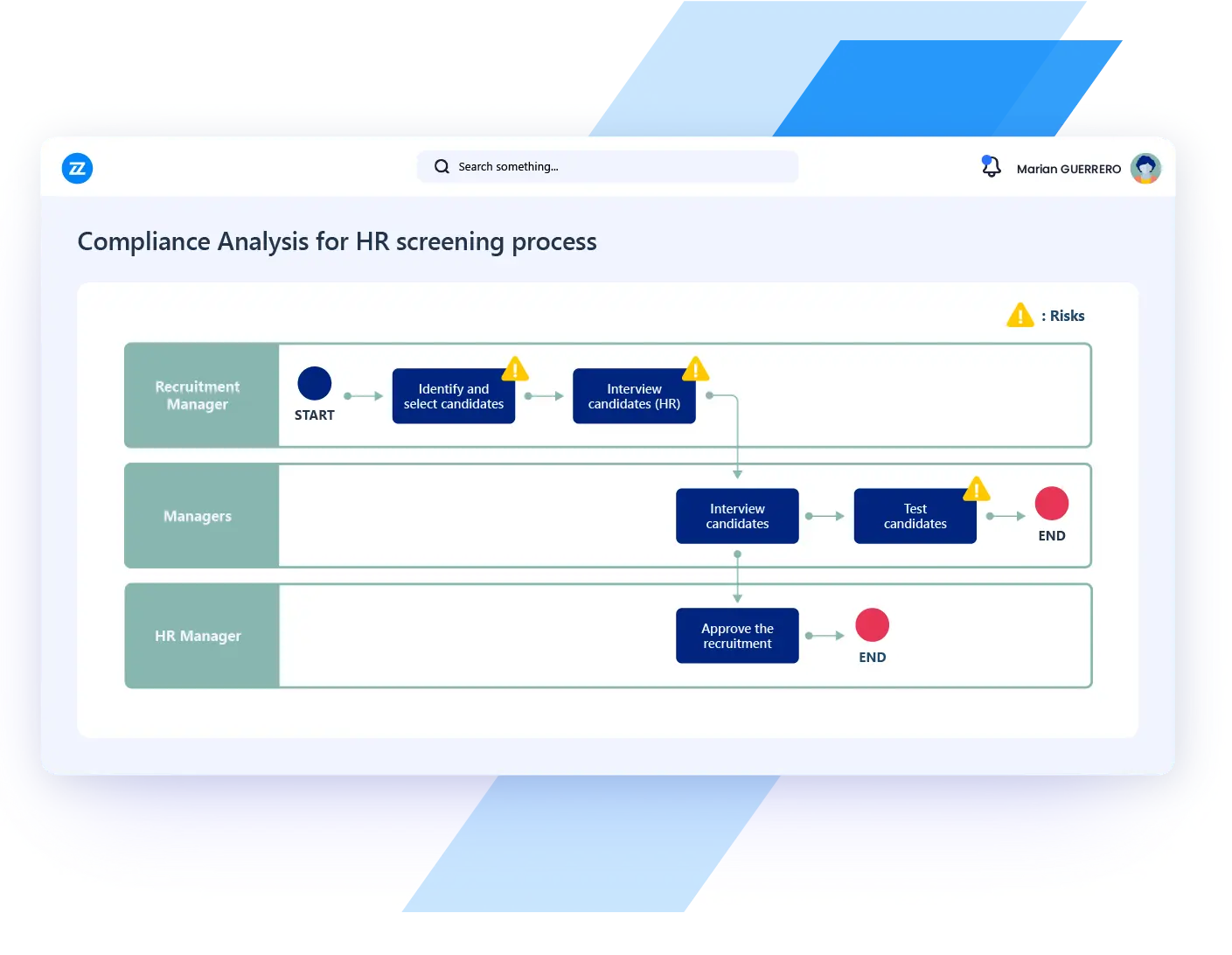
- Improve quality and compliance with mappings to frameworks and standards.
Business Process Standardization
Drive Consistency Across Operations
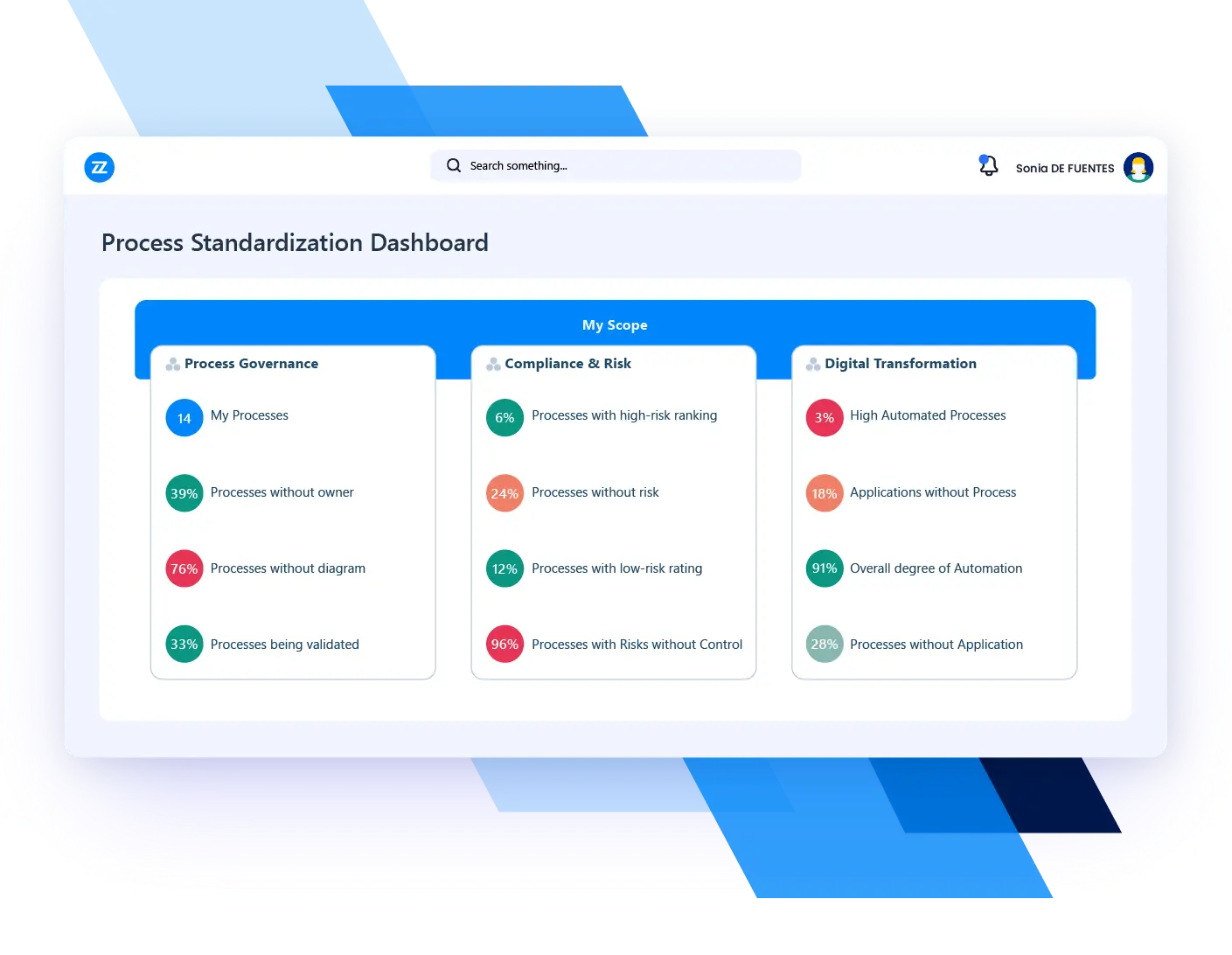
- Catalog your process landscape and identify standardization opportunities.
- Define process standards and reuse best-practice models to drive consistency and standardization.
- Strengthen governance with embedded controls and visibility of deviations.
“Bizzdesign gives us a structured view of our business capabilities, helping us align technology investments with business priorities and mature our Enterprise Architecture practice.”
CISO at Southern Alberta Institute of Technology



Streamline How Work Gets Done
Standardize and streamline processes to cut complexity and improve performance.